Tuesday, February 4, 2014

Gluten-Free Ethiopian Wonder Grain Teff Is A Favourite Among Victoria Beckham And Gwyneth Paltrow

Dubbed the 'new quinoa' (apart from Ethiopians who have been eating it for thousands of years), teff is the new grain that people can't stop talking about.

Even if you aren't a fan of celebrity endorsements - Gwyneth Paltrow and Victoria Beckham are said to love the stuff - it has top notch health credentials, as it is rich in protein, iron and calcium.

In other words, a fantastic option for people who don't eat gluten or dairy, and for vegetarians who struggle to get protein into their diets.
Talking to HuffPost UK Lifestyle, nutritionist Alice Mackintosh from The Food Doctor said: "As well as having an attractive nutrient profile, teff also boasts 13% protein, making it an ideal grain for slow release energy. It is also naturally gluten free, so is likely to cause rather a stir amongst those keen to stick to a gluten free diet.

US market offers growth potential for Ethiopian-based food manufacturer

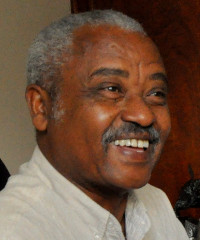
Hailu Tessema, owner of Mama Fresh Injera
Anyone who has been to an Ethiopian restaurant will be familiar with injera, a slightly spongy pancake-like flatbread used simultaneously as food, eating utensil and plate. Ethiopian cuisine is traditionally served on injera. Using one’s hand, small pieces of injera are torn and used to grasp the stews and salads for eating. The injera under these stews soaks up the juices and flavours of the foods and, after the stews and salads are gone, this bread is also consumed.
Mama Fresh Injera, based in Ethiopia’s capital Addis Ababa, is said to be one of the largest commercial manufacturers and exporters of fresh-baked injera. The family business was started in 2003 by Hailu Tessema. His wife is production manager and his son is in charge of marketing.
While Mama Fresh has a decent local clientele in Ethiopia, supplying hotels such as the Sheraton and Hilton, the company sees growth opportunities in the export market.

Ethiopian Airlines appoints Emerald Media as UK PR agency

As part of its PR efforts, Emerald Media will highlight Addis Ababa as a destination in its own right, but also as an emerging and convenient hub for attractive destinations in Africa and onward long haul destinations on the Ethiopian network.

As it enters a strong period of growth with new aircraft arrivals and the best inflight product in its history, Ethiopian Airlines, the fastest growing and Africa’s award- winning Airline, appoints Surrey, UK based Emerald Media to handle its UK and Ireland public relations brief effective January 15th.  

From London Ethiopian offers connections with 48 destinations on the African continent. Options include six weekly flights to Ethiopia’s capital Addis Ababa, flights to popular holiday destinations such as Zanzibar, Mombassa, or Kilimanjaro and schedules to growing business centres such as Lagos and Johannesburg.

As part of its PR efforts, Emerald Media will highlight Addis Ababa as a destination in its own right, but also as an emerging and convenient hub for attractive destinations in Africa and onward long haul destinations on the Ethiopian network such as Guangzhou in China and Rio de Janeiro, ideal for this year’s World Cup.

Ethiopia should build ‘smaller dam’: Egyptian Minister of Irrigation

By Aya Nader

If Ethiopia wants to generate electricity, it should build a smaller dam, Minister of Irrigation Mohammad Abdul Muttalib said Monday, according to state-owned Al-Ahram.

The remarks came during a visit to Sharqeya governorate to inaugurate a number of water pumping stations. There, the minister stressed that Ethiopia’s planned Grand Ethiopian Renaissance Dam (GERD) should “work with higher efficiency without harming other countries,” asserting that the current dam’s current efficiency levels do not exceed 30%.

Irrigation ministry spokesman Khaled Wassif said, “The minister meant they should build two small dams. This way they could generate electricity and not affect the water.”

Somalis balk at plans for Ethiopian troops

Thousands of Ethiopians will be deployed as part of an African Union peacekeeping mission, worrying many in Somalia.
Nairobi, Kenya - Many Somalis are alarmed at a recent decision to include Ethiopian troops in the African Union Mission in Somalia (AMISOM), a peacekeeping force in the war-ravaged country.

Somali analysts opposing the decision have called it "a mistake", a "political and military miscalculation" that has the potential to "change the body politic of Somalia". After decades of bad feelings between Mogadishu and Addis Ababa, many Somalis see their western neighbour as a Christian arch-foe that should have no role in the affairs of a Muslim country.

Ali Mohamud Rage - a spokesman for al-Shabab, an armed anti-state group in Somalia - urged his countrymen to rise up against the Ethiopians to defend their country or "suffer regret when it's too late".

"The AMISOM shirt legitimates the spilling of the blood of the Somali people and the occupation of the Muslim land of Somalia and the elimination of their religion... We say: 'Wake up from your slumber.'"

Sunday, February 2, 2014

Eight Business benefits of resuming economic relations between Ethiopia and Eritrea – By Tony Carroll

Ethiopia and Eritrea ceased business relations upon the commencement of the border war in 1998. While a small amount of barter trade still exists, it is fair to say that trade relations between the two countries are non-existent – this is very much to the detriment of the private sectors in both countries (and across the region).

Since the closure of the border, the economic fortunes of Ethiopia and Eritrea could hardly have been more divergent. While both remain poor countries in terms of per capita wealth, Ethiopia has been among the fastest and growing countries in the world averaging a steady 10% per annum growth for the past nine years. Conversely, as per the chart below, Eritrea has suffered vast fluctuations in its economic growth from a low of – 9% in 2008 to the 2012 level of + 7.5%.

GDP Growth over the years (“Eritrea Country Report.” Global Finance).
Year Real GDP Growth in Percentage
2001 8.8
2002 3
2003 -2.7
2004 1.5
2005 2.6
2006 -1
2007 1.4
2008 -9.8
2009 3.9
2010 2.2
2011 8.7
2012 7.5

Ethiopia has also been a leader in Africa in terms of infrastructure development, especially in the construction of roads, power infrastructure and water supply. Eritrea has endeavoured to rebuild its transportation infrastructure after the border war but progress has been slowed by inaccessibility of finance.  In terms of education, Ethiopia has built dozens of institutions of higher education in the past 10 years and has begun to develop a work force that is increasingly in demand by manufacturers from Turkey, China and India. Despite promising signs of self reliance immediately after Independence, Eritrea continues to find its work force diminished due to emigration and military service.

Genzebe Dibaba smashes world indoor 1500m record with 3:55.17 in Karlsruhe

Her big sister Tirunesh has twice been a world record breaker indoors and it was the turn Genzebe Dibaba to make her own mark on the under cover record books when she smashed the women's world indoor 1500m record * by more than three seconds with a run of 3:55.17 at the IAAF Indoor Permit meeting in Karlsruhe, Germany, on Saturday (1).

The previous best had been 3:58.28, set by Russia’s Yelena Soboleva in 2006, and Dibaba's own previous indoor best was 4:00.13. Her time was also more than a second faster than Abeba Aregawi's Ethiopian outdoor record of 3:56.54.

Slovenia’s Sonja Roman took Dibaba through 400m in 1:02.39 and then 800m in 2:08.96, just under a second faster than Soboleva at this stage in proceedings with the Russian having clocked 2:09.7 after four laps of the track, but soon afterwards the Ethiopian hit the front and then it was just a race between her and the clock.